 EU Weekly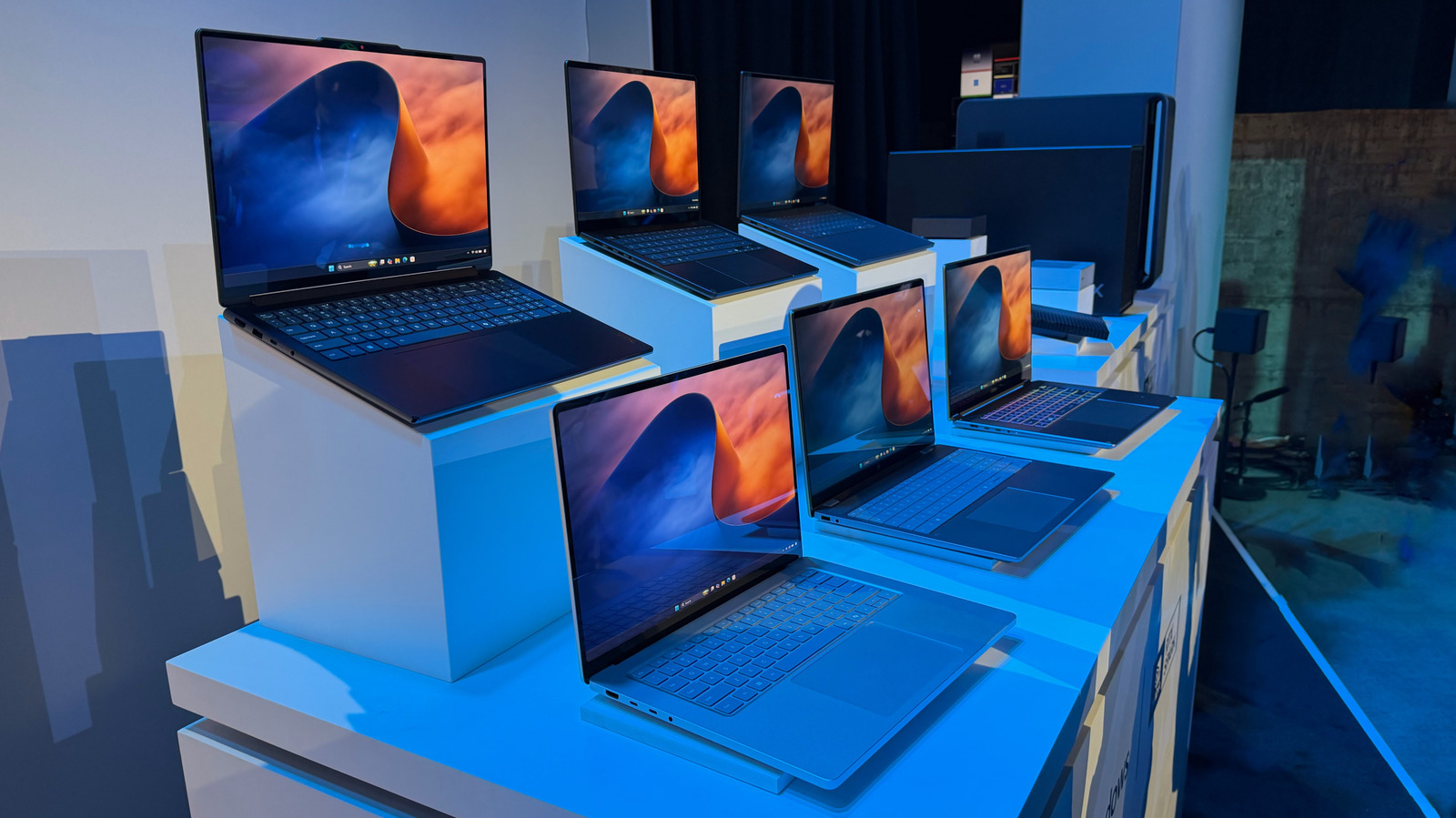
Windows PCs may finally catch up to Apple Silicon. Devindra Hardawar for Engadget Last week, I spent two days hearing how Microsoft and NVIDIA are "reinventing the PC" with RTX Spark, the new system-on-a-chip powering the Surface Laptop Ultra and several other Windows PCs this fall. It's the first time we've seen powerful Arm CPUs joined together with NVIDIA's Blackwell GPU technology and up to 128GB of ultra-fast unified memory on a single chip.
Theoretically, RTX Spark should allow for thin-yet-powerful laptops (and a few small desktops) that can handle AI tasks locally, as well as tackling content creation and gaming. So sure, I suppose NVIDIA and Microsoft have a reason to gloat a bit. But, just like the launch of Snapdragon-powered Copilot+ systems two years ago, it was hard to ignore the elephant in the room: RTX Spark is clearly a response to Apple Silicon and the transformational changes it brought to Macs six years ago .
Apple's chips are also made up of a powerful Arm CPU, capable GPU and fast unified memory, and they span the company's lineup from the tiny Mac mini to the super-powerful Mac Studio and 16-inch MacBook Pro. With RTX Spark, Windows users finally have a way to see the benefits of an efficient Arm-based SoC on high-end PCs, while the recent batch of Qualcomm chips covers the low-end and mid-range. There weren't many surprises at Microsoft's AI launch event (featuring the Surface Laptop Ultra), or at NVIDIA's RTX Spark Editor's Day, which I attended alongside other media and analysts.
Both companies want to sell us a future where we can run AI models and agents right from an RTX Spark-powered Windows laptop, something that seemed clear since the chip was announced at Computex . But even if that future doesn't come to pass, RTX Spark could still lead to some intriguing changes in the PC world. Under the hood with RTX Spark NVIDIA The RTX Spark SoC is powered by up to 20 NVIDIA Grace Arm CPU cores (10 performance cores and 10 efficiency cores), a Blackwell GPU with up to 6,144 CUDA cores, and up to 128GB of unified LPDDR5x memory running at 9,400 Mbps.
There's also a slightly less powerful configuration with 18 CPU cores and 5,120 GPU cores. RTX Spark also includes much of what you'd find on NVIDIA's latest GPUs, including fifth-gen tensor cores, fourth-gen ray tracing cores, and a Blackwell video engine (with support of AV1 UHQ and 4:2:2 encoding and decoding). By shoving all of this hardware onto a single chip, NVIDIA claims the RTX Spark is twice as efficient as a laptop powered by an Intel Core Ultra 9 285H and RTX 5070 dedicated GPU, while gaming at 60 watts.
NVIDIA has previously said RTX Spark systems should be similarly powerful to RTX 5070 laptops, though as you can tell from the chart below, those dedicated GPU systems can also draw a lot more energy for better performance. NVIDIA If you plan to be connected to power most of the time and don't need to travel with your laptop, you may see little benefit from choosing an RTX Spark system. But if you need to do serious creative work on the go, RTX Spark's improved efficiency allows PCs to work as fast on battery as they are while plugged in, according to NVIDIA.
From my brief time with the Surface Laptop Ultra, I didn't notice any performance drops while playing Gears of War: E-Day on battery power. The game still looked silky smooth in 1440p with high graphics settings. RTX Spark is built for AI, but also helps content creation and gaming NVIDIA With its support for tons of unified RAM, RTX Spark systems should appeal to AI developers and researchers who need as much memory as they can to run large AI models locally, like the 125B parameter Qwen3.8-Flash-Next .
An RTX Spark system could significantly reduce the amount of money spent on cloud AI tokens, or replace that demand entirely. One researcher I spoke with was jealous that his colleagues were able to easily run AI models on modern Mac laptops, and he was excited about the possibility of doing the same on a Windows notebook. RTX Spark is also coming along as Microsoft is adding more support in Windows 11 for on-device AI tools like Perplexity , as well as simplified ways to set up AI agents like OpenClaw and GitHub Copilot.
Not surprisingly, NVIDIA is also touting RTX Spark's gaming capabilities. Since it features a Blackwell GPU front and center, it'll deliver all of the features you'd expect from RTX 50-series cards, including support for DLSS 5. As I mentioned before, you can expect performance similar to an RTX 5070 — NVIDIA is specifically touting 1440p as the intended resolution for RTX Spark systems, though I'd be interested to see how they perform in 4K with DLSS.
A new performance mode for DLSS Frame Generation can push Cyberpunk 2077 up to 280fps with 6x frame gen, compared 213fps without performance mode. (It's unclear what you lose to achieve that frame bump, though.) Devindra Hardawar for Engadget Since RTX Spark is Arm-based, it won't natively run every game on Windows, but NVIDIA claims recent titles like Control Resonant and the aforementioned Gears of War: E-Day will be supported at launch thanks to Microsoft's Prism emulator for x86 software. NBA 2K27 , the main DLSS 5 launch game, will also be supported, alongside World of Warcraft: Forever . NVIDIA says it's also working with major anti-cheat providers to support their products, something that's prevented multiplayer games from working on Arm Windows systems in the past.
I'll have to spend more time with RTX Spark systems to see how well they actually handle gaming, beyond my minutes with Gears of War: E-Day. But if playing games is a priority, you'd still be better off with an Intel or AMD system with a dedicated GPU. At least then you wouldn't have to worry about potential emulation issues.
RTX Spark systems will also be useful content creation — again, as you'd expect from PCs with RTX Blackwell GPUs. You can lean on hardware acceleration in tools like Blender, and notably, Adobe is re-architecting Photoshop and Premiere specifically for NVIDIA's platform. That's a major sign of faith from one of the biggest software companies around, though I suppose Adobe is also reading the tea leaves and seeing a bright future for Arm-based Windows systems in general.
RTX Spark isn't for everyone, but that's okay Devindra Hardawar for Engadget NVIDIA isn't targeting casual consumers with RTX Spark, not with a starting price of $2,600 for 18-core systems, or an eye-bleeding $3,700 for the full-powered 20-core models. Both NVIDIA and Microsoft are targeting AI developers and researchers who have the money to spend on insane amounts of RAM. And they should be prepared to open their wallets — a Surface Laptop Ultra with 128GB of RAM will cost a smooth $5.900.
Still, that's a good deal cheaper than a fully-equipped M5 Max 16-inch MacBook Pro with 128GB of RAM, which costs $7,000. Simply by existing, the RTX Spark platform will likely push Intel and AMD in creative new directions. AMD is trying to accomplish something similar with its Ryzen AI Max 400 chips , which can also house a ton of unified memory, but can also run existing x86 software without any emulation.
And Intel has been eager to prove itself against AMD for the last few years, which has resulted in its powerful Core Ultra Series 3 chips . As always, competition is great for consumers.
Source: Engadget